Obesity / Weight Management Pre-Clinical

BNS Peripheral CB1R Blocker

Developed for obesity and weight management, with demonstrated efficacy in animal models and negligible brain penetration, addressing the safety issue that caused Rimonabant's withdrawal.

Peer-reviewed · J Med Chem 2025
2025
J Med Chem publication
Granted
Patents, multiple countries
Oral
Small molecule

Program at a glance

Mechanism: Blocks CB1 receptors in gut, adipose tissue and liver, with negligible brain penetration.
Efficacy: In obese mice, reduced body weight, adiposity and liver triglycerides.
Oral: Small molecule, not an injectable.
IP: Granted patents in multiple countries, further applications under examination.
Peer-reviewed: BNS808, one of several BNS blockers, characterised in the Journal of Medicinal Chemistry, 2025.

Licensed to

Quris AI

Lead optimisation, ADME and IND-enabling work ongoing.


Weight Reduction

Significant Body Weight Reduction in Obese Mice

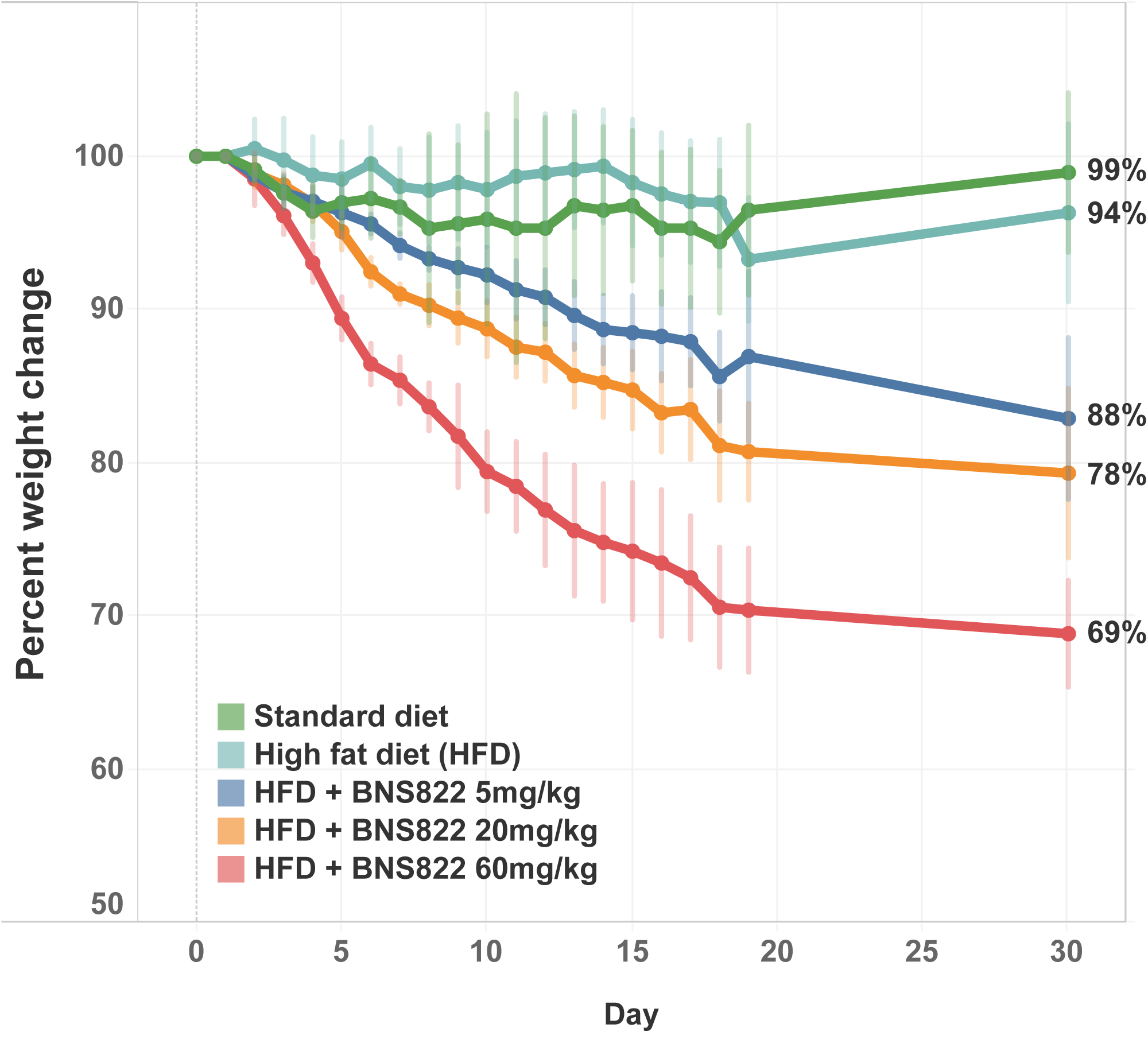
Preclinical study demonstrates that BNS peripheral anti-CB1 drives significant, dose-dependent weight reduction in diet-induced obese mice.

Weight Change Over Time in Obese Mice
BNS anti-CB1 body weight reduction chart
Percent weight change over time in mice on a high-fat diet treated with vehicle or different doses of BNS822 compared to standard diet controls. BNS822 shows a clear dose-dependent reduction in body weight. Internal preclinical data.

Dose-Dependent Efficacy

Obesity and metabolic disorders are closely linked to overactivation of the endocannabinoid system. By blocking these receptors, BNS anti-CB1 helps restore metabolic balance. Our pre-clinical studies in diet-induced obese (DIO) mice demonstrate robust weight loss efficacy:

Significant Weight Reduction
DIO mice treated with BNS anti-CB1 showed significant weight loss compared to the untreated high-fat diet control group.
Dose-Response Profile
The rate and extent of weight loss scale directly with the administered dose, consistent with the pharmacological specificity of the molecule.
No Impact on Normal Physiology
Treatment has no effect on body weight in mice on a standard, normal diet, consistent with the molecule acting on metabolic excess rather than normal physiology.
Food Intake

Weight Loss is Driven by Lower Food Intake

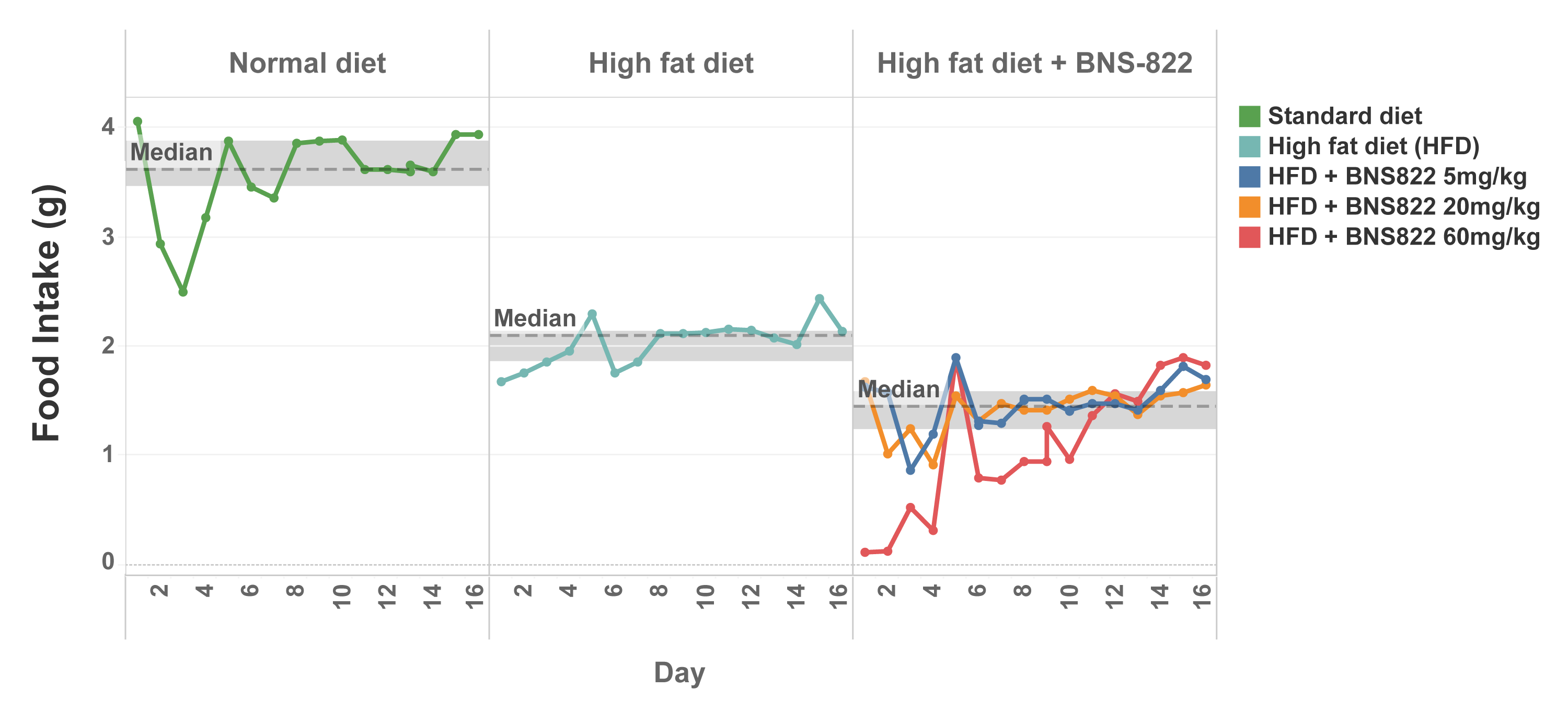
Preclinical data shows that treatment with BNS anti-CB1 leads to a significant, dose-dependent reduction in food intake in mice on a high-fat diet.

Targeted Appetite Regulation

Peripheral CB1 receptors play a key role in mediating food intake and energy balance. BNS anti-CB1 blocks these receptors locally, producing direct satiety signals without central nervous system intervention. The observed weight loss is consistent with this reduction in caloric consumption:

Decreased Caloric Intake
Mice treated with BNS anti-CB1 consumed significantly less food compared to the untreated high-fat diet group.
Satiety-Driven Sparing
The appetite regulation is local and natural, helping restore the dysregulated metabolic pathways seen in obesity.
Daily Food Intake Over Time
BNS anti-CB1 food intake reduction chart
Food intake (g) over time in standard diet, untreated high-fat diet, and BNS822-treated high-fat diet mice. The treated group shows a sustained reduction in daily food intake. Internal preclinical data.
Muscle Preservation

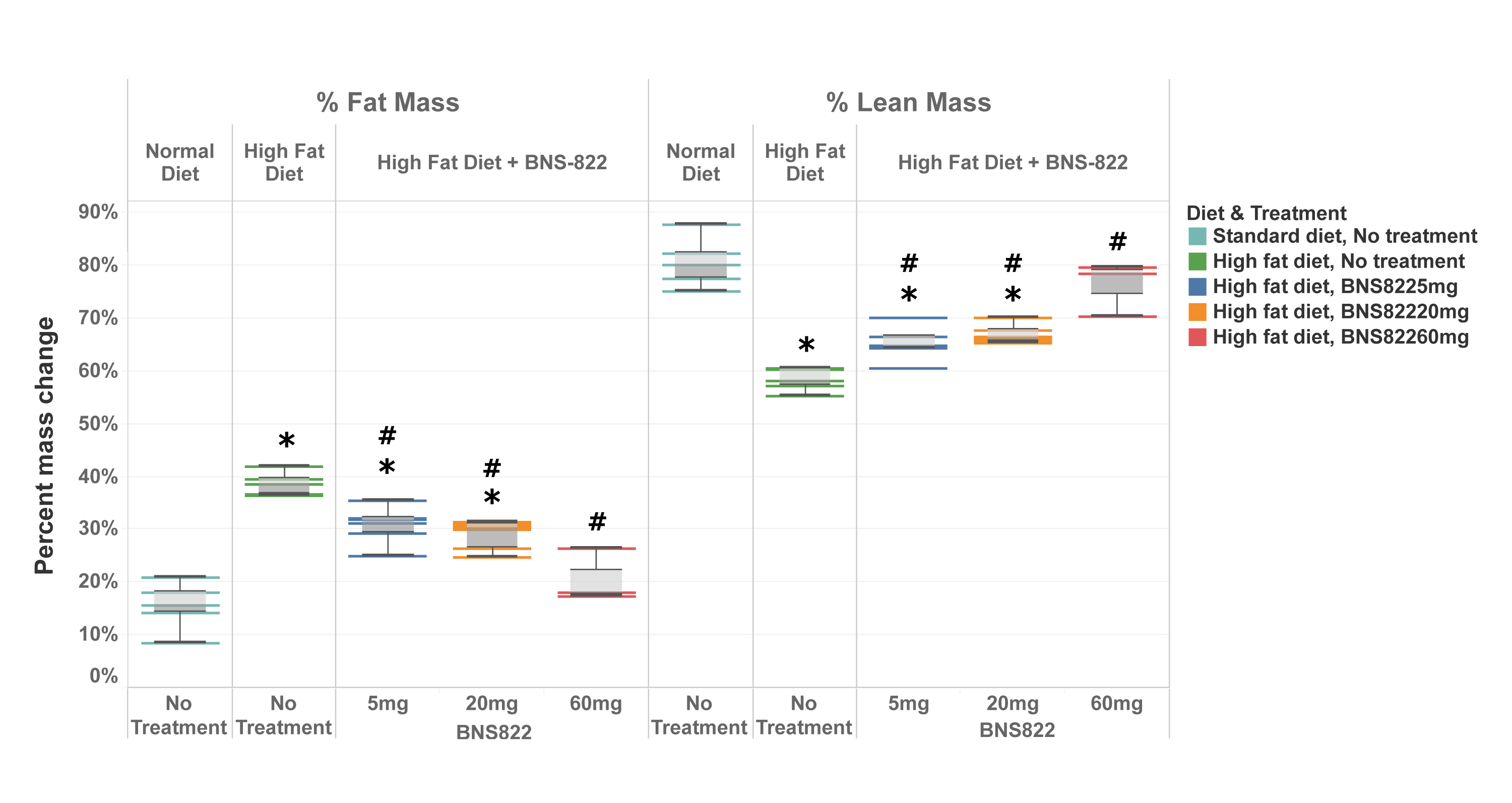
Fat Mass Reduction with Lean Mass Largely Preserved

BNS anti-CB1 reduces fat mass with limited impact on lean muscle mass in preclinical models, a potential advantage over GLP-1 receptor agonists.

Body Composition: Fat Mass vs. Lean Mass
BNS anti-CB1 fat mass reduction chart
Changes in body fat mass and lean muscle mass following treatment. BNS822 reduces fat mass with low impact on lean muscle tissue. Internal preclinical data.

Selective Fat Mass Sparing

Loss of lean mass alongside fat is a recognised limitation of current weight-loss therapies. BNS anti-CB1 is directed at adipose tissue:

Selective Fat Reduction
Treatment drives a significant, targeted reduction in white adipose tissue and body fat percentage.
Lean Muscle Largely Preserved
Lean muscle tissue is largely preserved during weight loss, helping maintain strength and metabolic rate.
CNS Safety

Peripherally Restricted: Negligible Brain Penetration

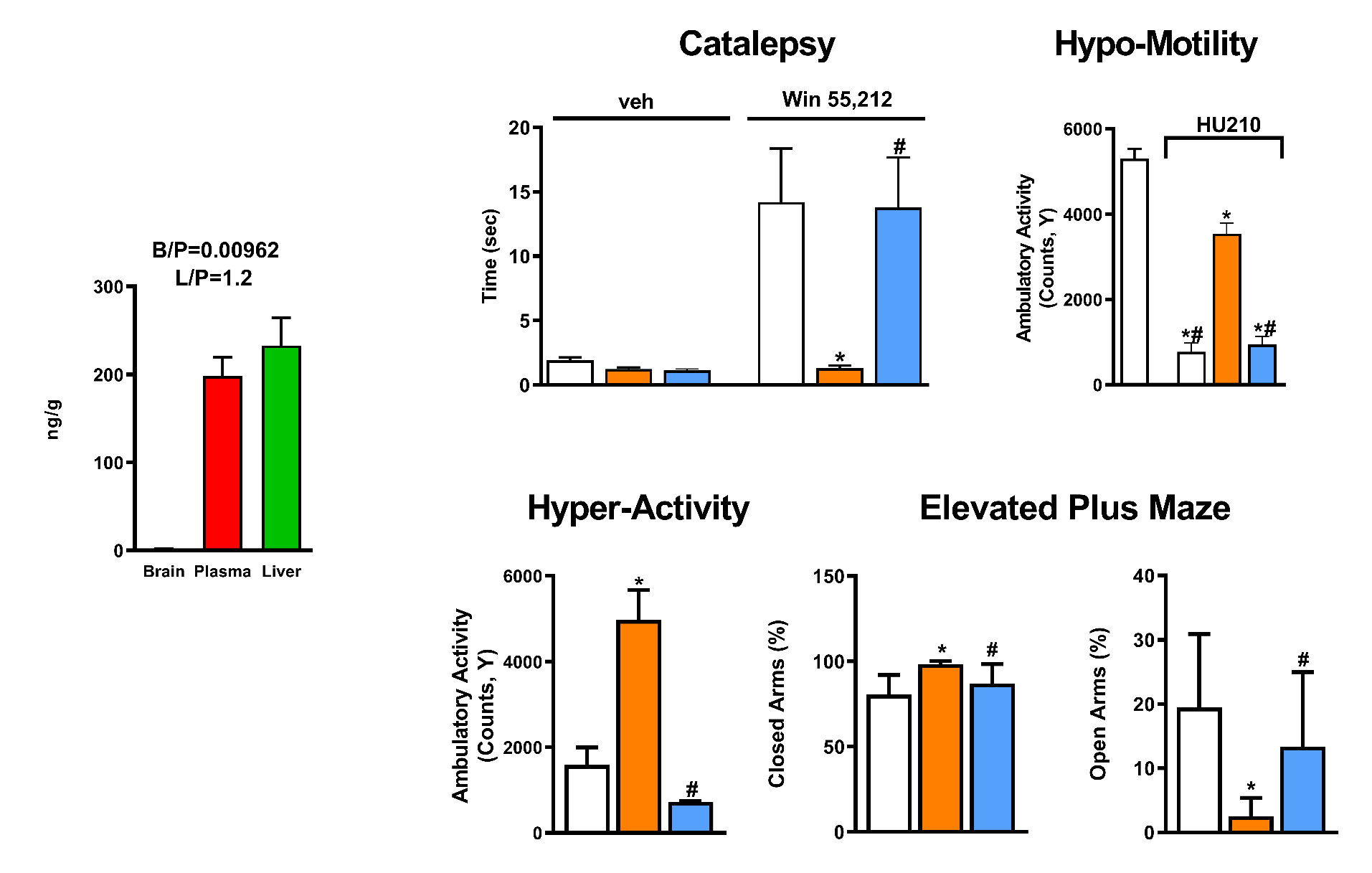
Tissue distribution studies show that BNS822 reaches the central nervous system only negligibly, addressing the psychiatric side effects that caused Rimonabant's withdrawal.

Solving the Rimonabant Challenge

While central CB1R blockade is effective for weight loss, it causes significant psychiatric side effects, including severe depression and anxiety. The BNS series is designed to be peripherally restricted, acting on receptors in the liver, gut, and adipose tissue with negligible entry into the brain:

~120× Lower Brain Penetration
Brain exposure of BNS822 is approximately 120 times lower than Rimonabant.
Peripheral Mechanism
Restricting receptor blockade to the periphery is designed to separate the metabolic benefit of CB1R blockade from its central effects.
Tissue Distribution comparison

Rimonabant Brain Levels

Rimonabant brain levels chart

BNS822 Brain Levels

BNS822 brain levels chart
Tissue distribution in mice following oral administration. BNS822 (20 mg/kg, PO) shows negligible brain exposure alongside robust peripheral levels, while Rimonabant (10 mg/kg) shows extensive brain penetration: roughly 120 times higher, despite the lower dose. Internal preclinical data.

BNS anti-CB1 and GLP-1 Receptor Agonists: Differentiated Approaches

BNS anti-CB1 (CB1R Blocker)
  • Oral small molecule, no injection
  • Fat mass reduction with lean mass largely preserved in preclinical models
  • Peripherally restricted, with negligible brain penetration
  • Complementary mechanism to GLP-1
  • Granted patents in multiple countries
GLP-1 receptor agonists
  • Predominantly injectable
  • Incretin pathway
  • Loss of lean mass alongside fat reported in the literature
  • Gastrointestinal tolerability a recognised limitation
  • Established clinical efficacy in obesity

Publications

Peer-Reviewed Science

BioNanoSim has developed several peripheral CB1R blockers. One of them has been characterized in the peer-reviewed literature, co-authored with Prof. Yossi Tam, Director of the Multidisciplinary Center for Cannabinoid Research at the Hebrew University of Jerusalem.

Synthesis and Pharmacological Characterization of Novel Peripheral Cannabinoid-1 Receptor Blockers Based on a Tricyclic Scaffold

Gammal A, Nassar T, Soae Y, Freeman N, Badihi A, Baraghithy S, Nemirovski A, Tam J, Benita S.

Journal of Medicinal Chemistry 2025;68(9):9431–9445 · PMID 40258217

Read on PubMed →

Forthcoming

BNS822 — manuscript in preparation

Characterisation of BNS822, the compound shown in the preclinical figures above, is being prepared for publication.

Contact → Oftac Program →