Ophthalmology Phase I/IIa Completed 2025 FDA Orphan Drug Designation

BNSO / Oftac
Tacrolimus Nano-Emulsion
Eye Drops

A proprietary nano oil-droplet emulsion platform that delivers tacrolimus directly to ocular tissues with low systemic exposure, enabling topical treatment of non-infectious uveitis.

18
Patients treated
88%
Improved ≥1 ACC grade
0
Patients who worsened

Development Roadmap

2022
Clinical Trial Authorised
Approval received from the Israel Ministry of Health to conduct the Phase 1/2a study.
2023
BNSO Joint Venture Established
BioNanoSim and Rafarm SA form BNSO to develop and commercialise Oftac.
2024
Phase 1/2a Trial Initiated
First patient enrolled March 2024. Multicentre, open-label study in active non-infectious anterior uveitis.
2025
Trial Completed
18 patients treated. Study completed February 2025; final study report issued July 2025.

The Technology

BNSO Platform: An Emulsion of Nano Oil Droplets

Emulsion platform based on nano oil droplets, solving the fundamental challenges of delivering the poorly soluble, water-sensitive drug tacrolimus as eye drops.
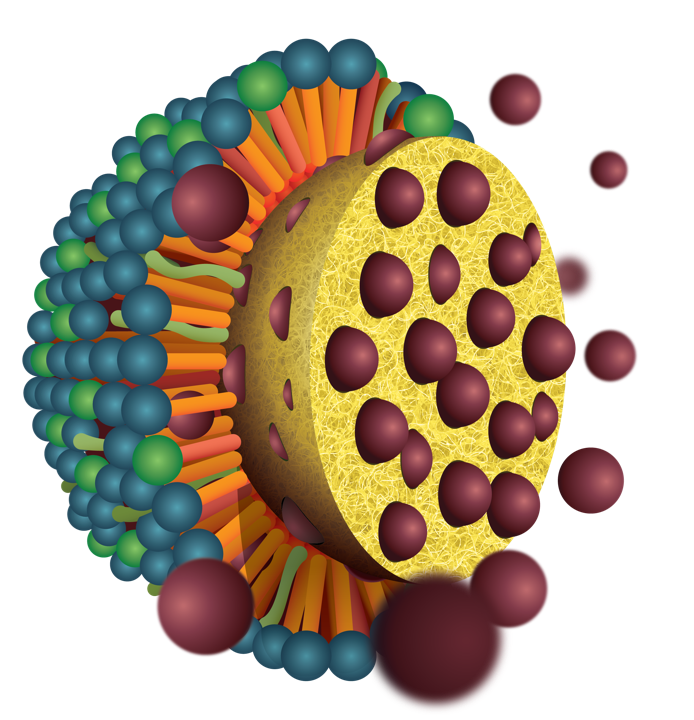
Oftac nano oil-droplet emulsion structure
Patent coverage
Granted patents in multiple countries, with further applications under examination.

How the nano oil-droplet emulsion works

Tacrolimus is poorly water-soluble and water-sensitive, two properties that make it nearly impossible to formulate as conventional eye drops. Oftac dissolves tacrolimus in the oil core of nano-scale oil droplets dispersed in water, a preservative-free ophthalmic emulsion in which the drug stays stable and bioavailable when administered topically.

Poor Solubility Addressed
Tacrolimus is dissolved in the oil core, maintaining drug stability and bioavailability in an aqueous eye drop formulation.
Low Systemic Exposure
The drug acts locally in the eye, with low systemic exposure, reducing the systemic immunosuppression risk associated with oral tacrolimus.
Local Tolerability
Adverse effects observed in the clinical study were predominantly mild and local, the most common being eye irritation.
Nano-Emulsion Droplet Architecture
Oil droplets with a mean size under 200 nm, with the drug dissolved in the oil phase. Preservative-free.
Preclinical Data

Preclinical Pharmacokinetics: Ocular Penetration and Systemic Exposure

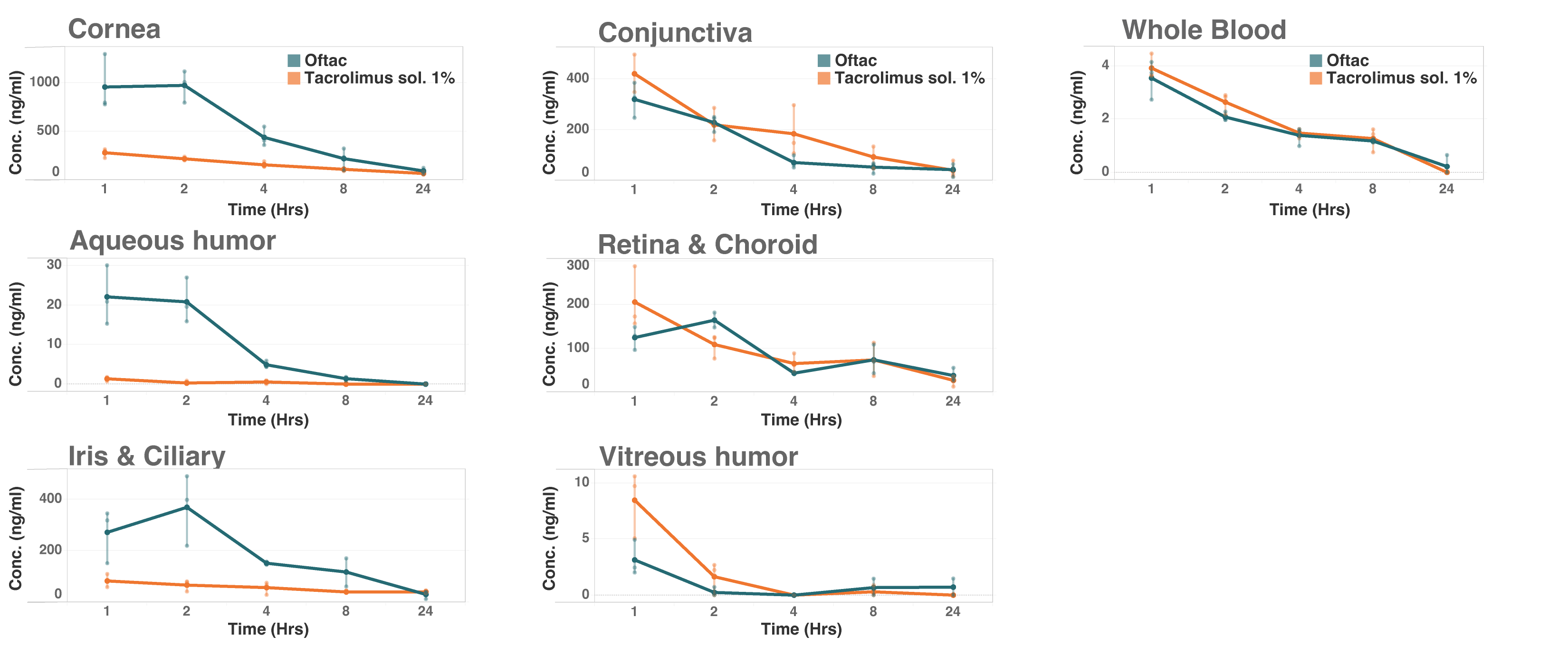
Rabbit pharmacokinetic data show higher concentrations across anterior ocular tissues than tacrolimus solution, with low whole-blood levels.

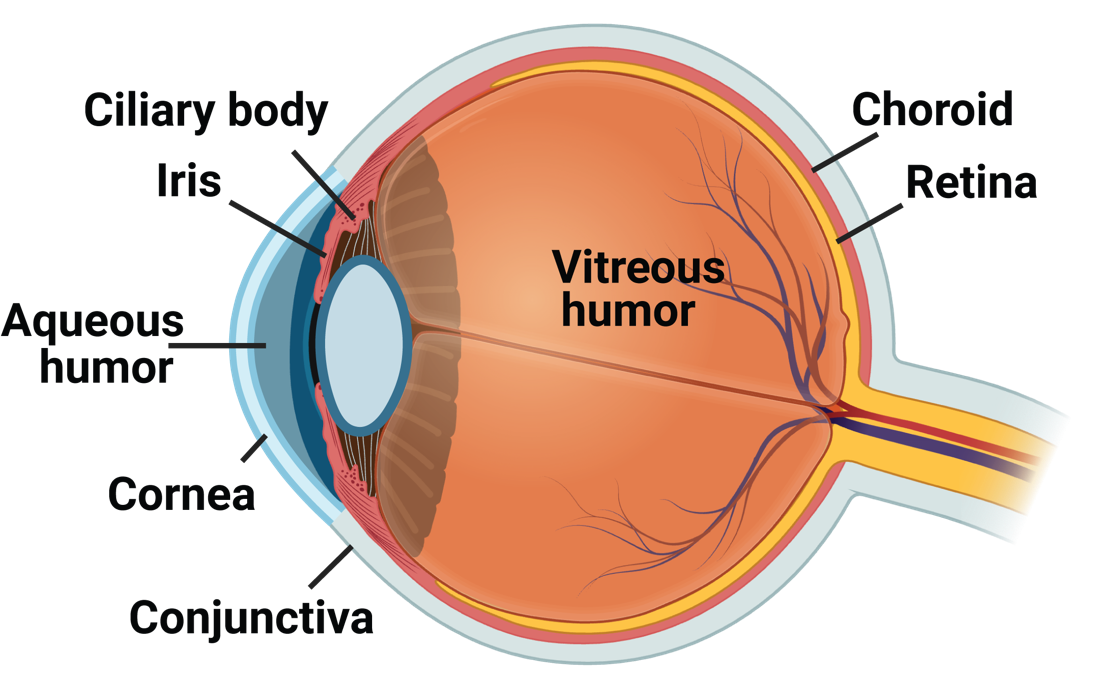
Ocular anatomy showing drug target compartments: cornea, iris, ciliary body, aqueous humor, retina

Key Finding: Sustained Anterior-Segment Concentrations

Oftac achieves sustained concentrations across anterior ocular tissues (cornea, conjunctiva, iris/ciliary body and aqueous humour) following a single topical dose.

Rabbit Pharmacokinetics · Oftac vs. Tacrolimus Solution 1%
Pharmacokinetic charts showing Oftac vs Tacrolimus solution concentrations across cornea, conjunctiva, aqueous humor, iris, retina and whole blood compartments over 24 hours
Tacrolimus concentration (ng/mL) measured across 7 ocular compartments at 1, 2, 4, 8 and 24 hours post-administration. Oftac (teal) shows higher concentrations than tacrolimus solution 1% (orange) across anterior compartments, while maintaining near-equivalent (low) whole blood levels, consistent with minimal systemic absorption.

Peer-reviewed publication

Topical tacrolimus nanocapsules eye drops for therapeutic effect enhancement in both anterior and posterior ocular inflammation models

Rebibo L, Tam C, Sun Y, Shoshani E, Badihi A, Nassar T, Benita S.

Journal of Controlled Release 2021;333:283–297 · PMID 33798665

Read on PubMed →

Clinical Evidence

Phase I/IIa Trial Results

A multicentre, open-label Phase 1/2a study of Oftac (0.05% tacrolimus ophthalmic emulsion) in patients with active non-infectious anterior uveitis, conducted in Israel. Final study report July 2025.

Study Design
Multicentre, open-label Phase 1/2a study · Oftac 0.05% tacrolimus ophthalmic emulsion · 18 patients treated · Active non-infectious anterior uveitis · Endpoint: Anterior Chamber Cell (ACC) grade reduction
Primary Efficacy Endpoint
88%
88% of patients improved by at least one anterior chamber cell (ACC) grade (p = 0.0002), the primary marker of uveitis activity.
Patients Who Worsened
0
No patient showed an increase in ACC grade from baseline to Day 29.
Systemic Exposure
Oftac is administered topically. Systemic exposure was low, reducing the systemic immunosuppression risk associated with oral tacrolimus.
Laboratory and Vital Signs
No clinically significant changes in laboratory values or vital signs were observed during the study.
Tolerability
Adverse events were predominantly mild and local, the most common being eye irritation, conjunctival hyperaemia and eye pain.

Phase I/IIa completed. Final study report issued July 2025.

Further information is available on request.

Contact →

Joint Venture

The BNSO Joint Venture: BioNanoSim + Rafarm

BNSO pairs BioNanoSim's ocular formulation science with Rafarm's sterile manufacturing and European commercial infrastructure.

BioNanoSim logo
+
Rafarm SA logo

How the joint venture works

BNSO was established as a dedicated joint venture to develop and commercialise Oftac. BioNanoSim contributes the nano-emulsion IP developed at the Hebrew University of Jerusalem; Rafarm contributes over 50 years of pharmaceutical manufacturing and its global commercialisation infrastructure.

BioNanoSim brings:

Proprietary tacrolimus nano-emulsion formulation, protected by granted patents in multiple countries
Decades of nanoparticle R&D expertise (Prof. Simon Benita)
Proven track record: Ikervis® acquired by Santen
Complete Phase 1/2a clinical data package · FDA orphan drug designation for uveitis

Rafarm brings:

Founded in 1974, over 50 years in pharmaceutical manufacturing
Exports to more than 60 countries across Europe, North America, Asia and the Middle East
Specialists in complex ophthalmic and sterile injectable products
GMP-approved facilities and European regulatory expertise

Leadership

Founder & BNSO Board of Directors

BNSO is guided by an experienced board combining pharmaceutical science, ophthalmology expertise, and global commercialization capabilities, founded on the vision of Prof. Simon Benita.

Prof. Simon Benita
Founder
Prof. Simon Benita
Founder & Scientific Visionary
Former Head of the School of Pharmacy and the Institute for Drug Research at the Hebrew University of Jerusalem. Decades of expertise in nanoparticle-based drug delivery. Proven commercial success: Ikervis® (ciclosporin cationic emulsion eye drops for severe keratitis in dry eye disease), acquired and launched by Santen in 2015.
Aris Mitsopoulos
BNSO
Aris Mitsopoulos
CEO & Chairman of BNSO
Leads BNSO, the joint venture between BioNanoSim and Rafarm SA, responsible for the clinical development and commercialization of Oftac. Brings deep pharmaceutical industry experience and strategic leadership to the partnership.

BNSO Board of Directors

Yair Benita
Yair Benita
Board Member
CTO at AION Labs. Founded 9 companies over 3 years as a venture builder. Led computational teams in drug discovery at CytoReason, Compugen, and Merck (MSD). Deep experience in oncology and immuno-oncology drug development.
Giulia
Giulia
Board Member
Experienced life sciences executive with expertise in pharmaceutical business development, licensing, and strategic partnerships across European markets.
Joe Pappa
Joe Pappa
Board Member
Broad expertise in pharmaceutical operations, regulatory strategy, and international drug development partnerships.
Ari Kellen
Ari Kellen
Board Member
Senior pharmaceutical industry leader with extensive experience in clinical development, regulatory affairs, and commercialization of specialty medicines.